

Towards Mediocrity
Your exceptionalism is the problem the parasite.

With the book launch in two weeks, I’ve been thinking about how to “speak intelligently about my art”. I revisit random pages from the manuscript and write talking points like fulfilling moments of catharsis // the male capacity to compartmentalize // what one inevitably writes about when one does not belong to a milieu. I read the lines back to myself, chuckling at the thought of uttering such things in public. I ctrl+F the manuscript for the word “shrug” and find eighteen instances. Almost ten percent of the pages in the book contain a shrug.
I attend the book launch of an established Canadian author called B. B is in his late sixties, if I had to guess. This is his twentieth book. There are six people in attendance: B, his interlocutor, myself, another writer, and two booksellers who run the store. I feel embarrassed for B, but he does not seem embarrassed. He calls the small turnout an “ego adjustment” and merrily reads excerpts from his new book. The work is discussed casually between the six of us, as if we were in his living room.
The interlocutor is a debut novelist with a buzzy new book. He is smart, passionate, well known in the city. The trajectory of his career is one I have daydreamed for my own. His questions suggest a literary education, a sharp critical lens, a close reading of the text. B meets each of his kind suggestions towards the lofty achievements of his book, and the wisdom it imparts to the world, with a gentle sort of bemusement. I wouldn’t dare claim any such thing of my work, he says. Two copies of the book are sold.
“So you really want to be a writer, eh?” says B. We are strolling around town, looking for a place to eat. He talks about sales volumes, travel budgets, book advances. The numbers are not glamorous. My advance was also a teeny tiny number I have mostly kept secret, ashamed that the thing I gave so much care to is valued so little by the market. (Capitalism, the religion of my upbringing, still has its hooks in me.) I share my anxieties about the launch: the make-up of the audience, the handsome faces that won’t appear, the authority with which I’ll be able to talk about catharsis and compartmentalizing and milieus. I say nothing that has any bearing on what it means to be a writer.
Over two tacos and a Modelo, B tells me a story about a billionaire who became his patron, whose money he later rejected because his writing process was not respected by the man; about discovering that one of his works had been adapted to a TV show without his being notified or compensated; about his and his partner’s decades-long meditation practice, the fruits of which are evident from the lack of contempt in his voice as he relays the two prior incidents. It seems impossible that a man at such peace with the world could have any need to write twenty books. But perhaps being at peace with the world, and what it chooses to do with your art, is the only way to be prolific.
The author’s son, V, has also decided to pursue writing. V is a good writer. He is not shy about his ambitions. I ask if he has any reservations about V pursuing the path. In my head, what I’m asking about is practicality. And by practicality, I mean stability. And by stability, I mean money. The thing I assume every parent worries about when their kid becomes a writer. It doesn’t require the hundreds of pages of dialogue B has written to know that I’m not really asking about V. But perhaps the decades of writing inform his response.
“I couldn’t be happier that he chose writing,” he says.
“I just don’t want him to get hurt, or to ever feel like a failure.
Because he really seems to love it, you know?
So long as he knows that loving it is enough.”
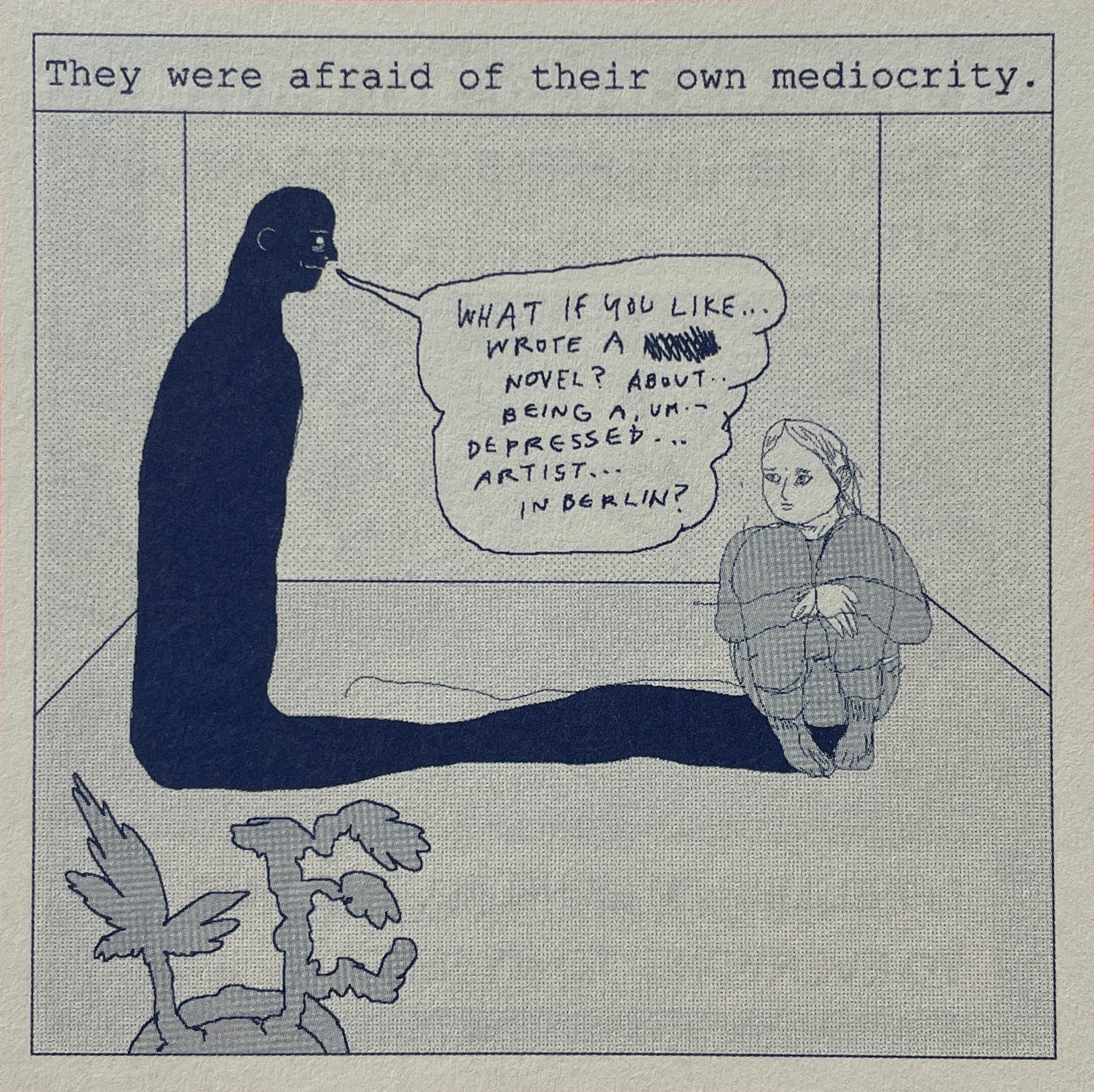
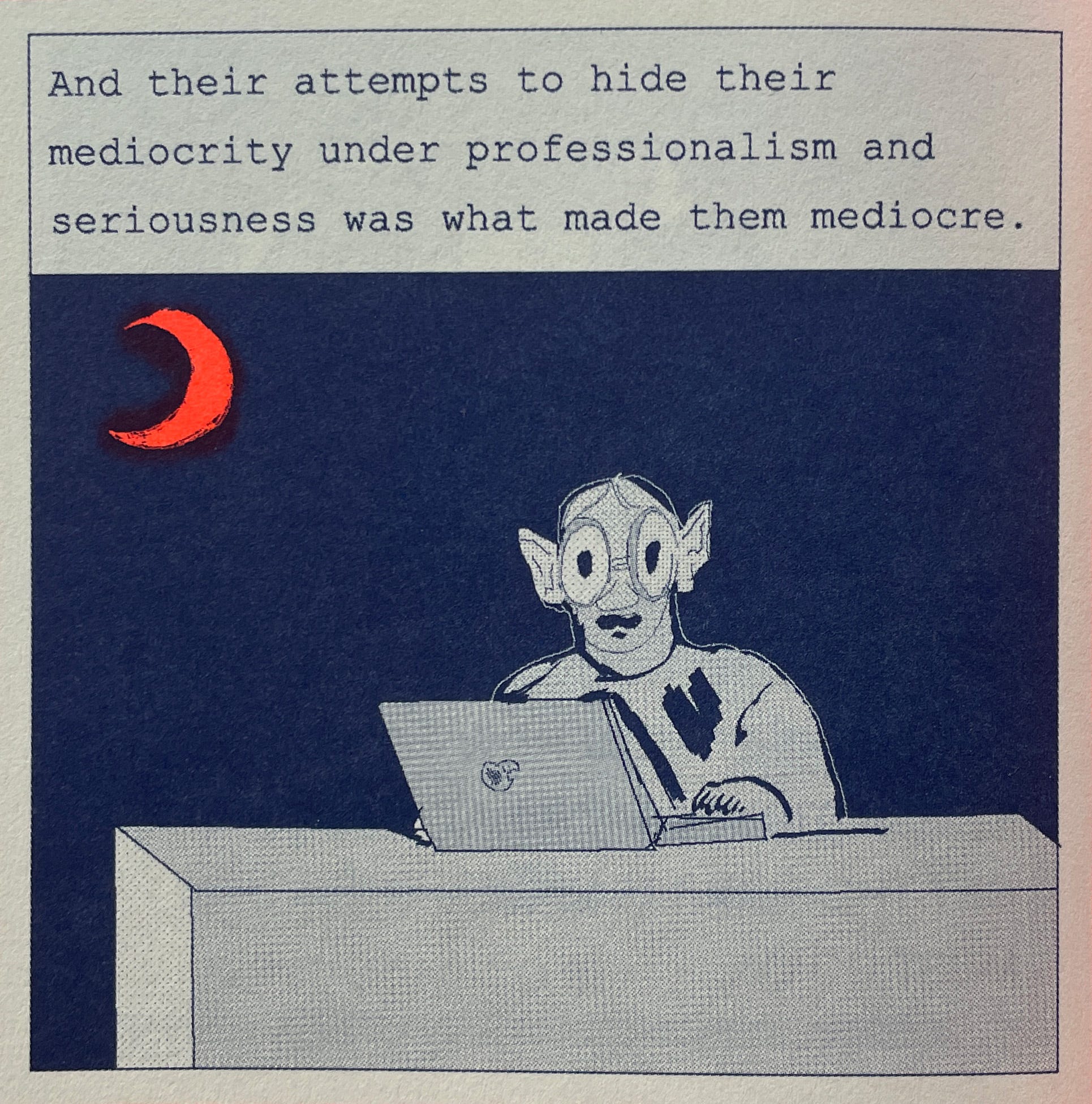
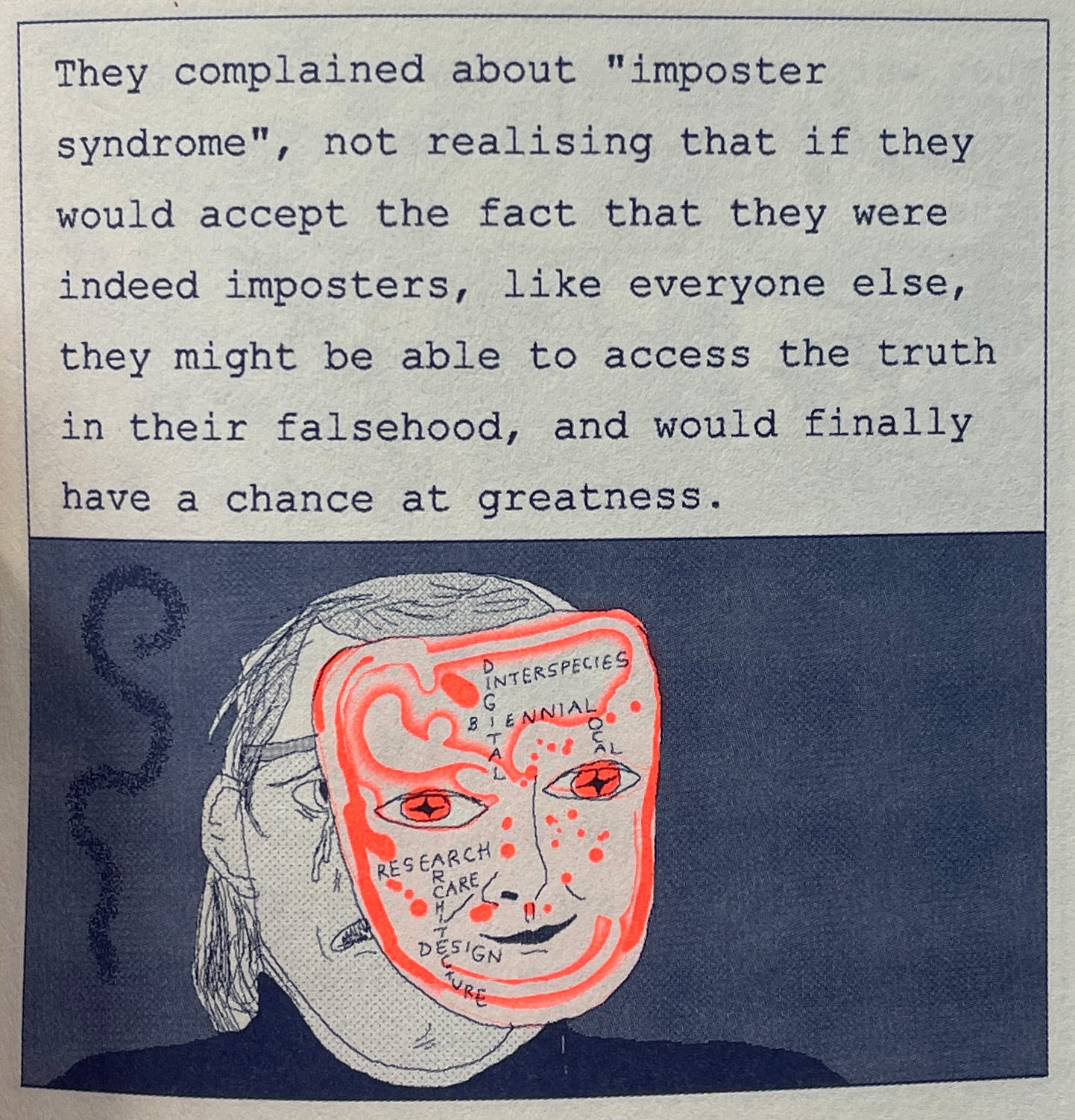
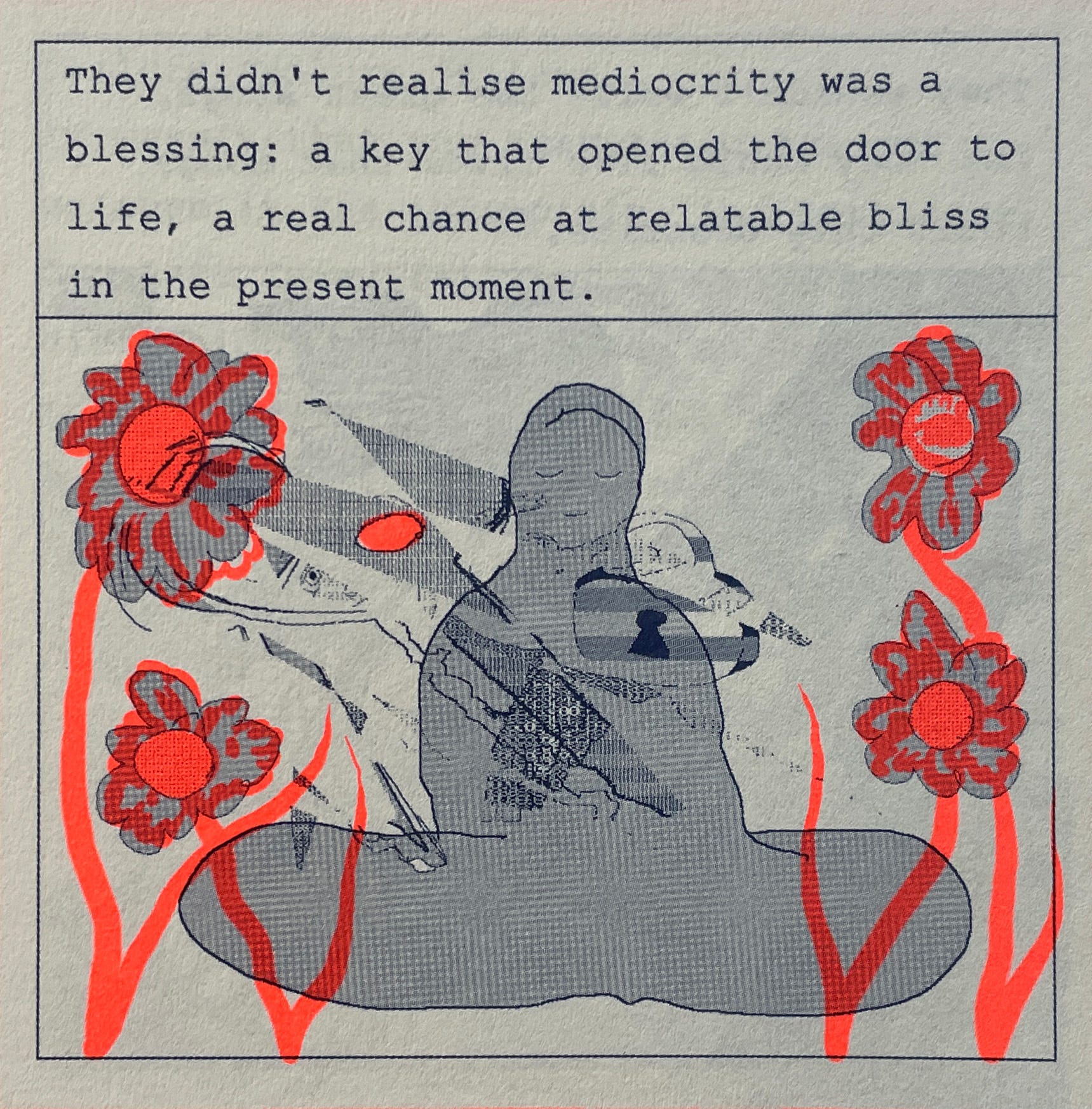
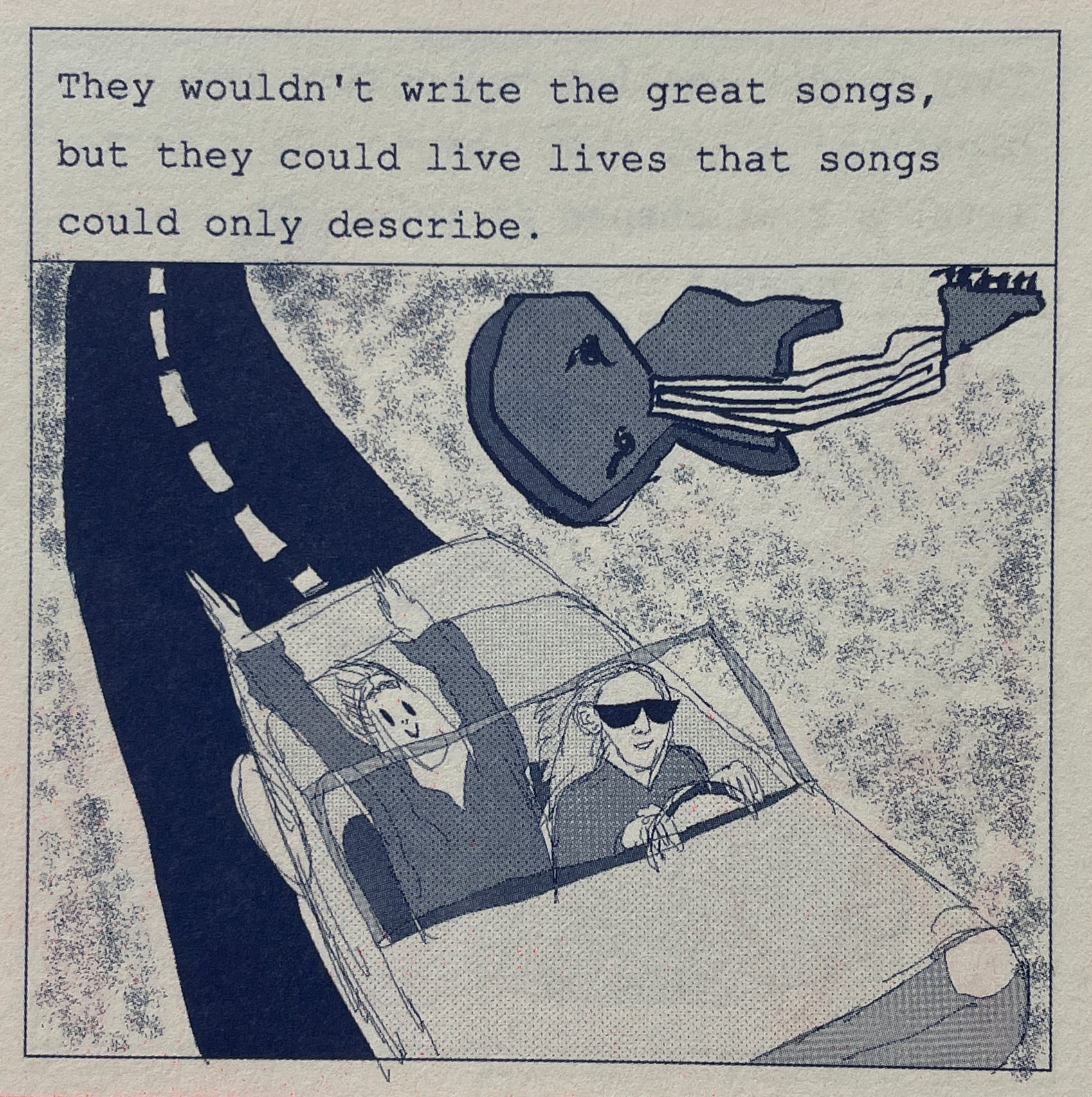
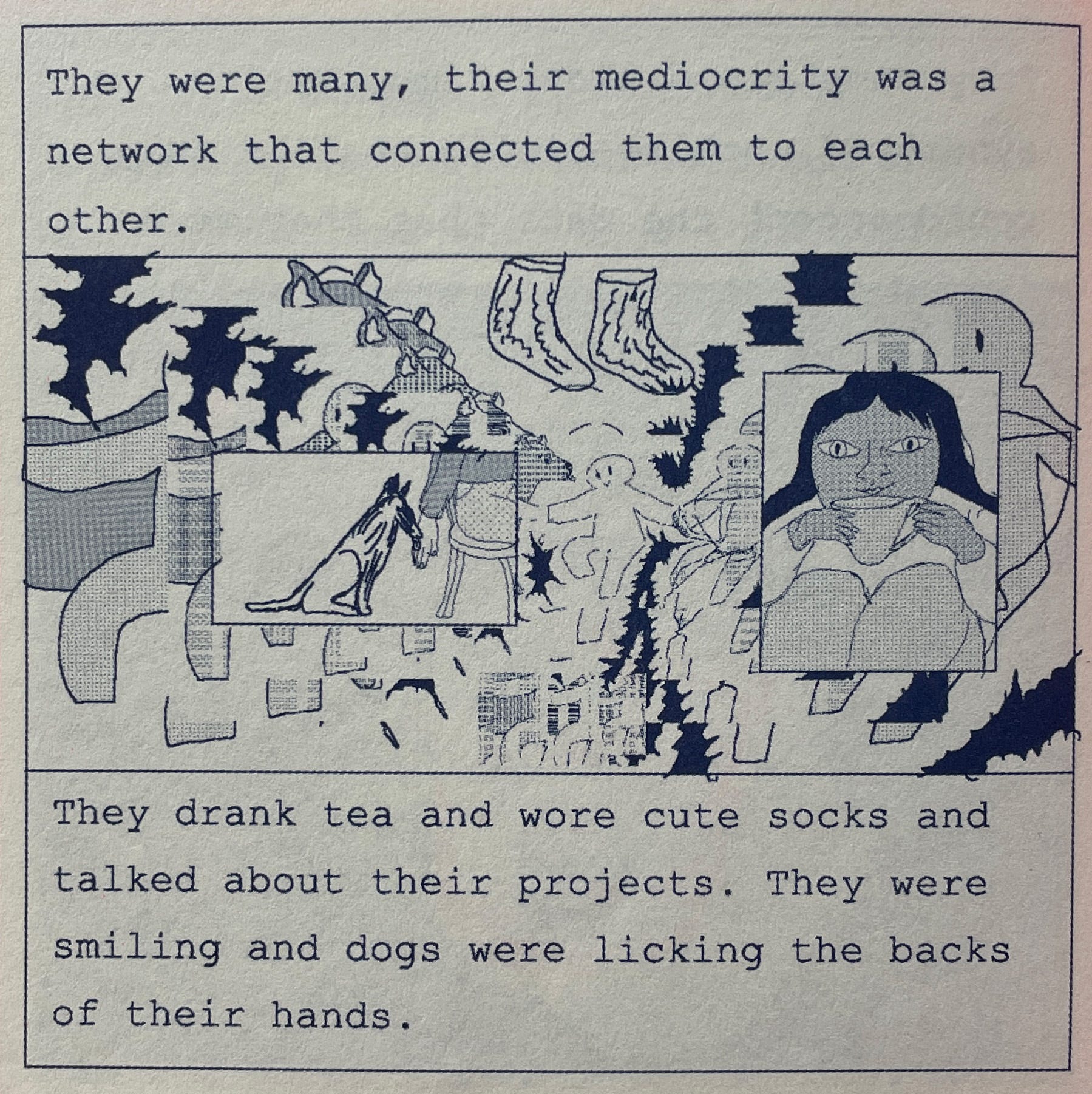
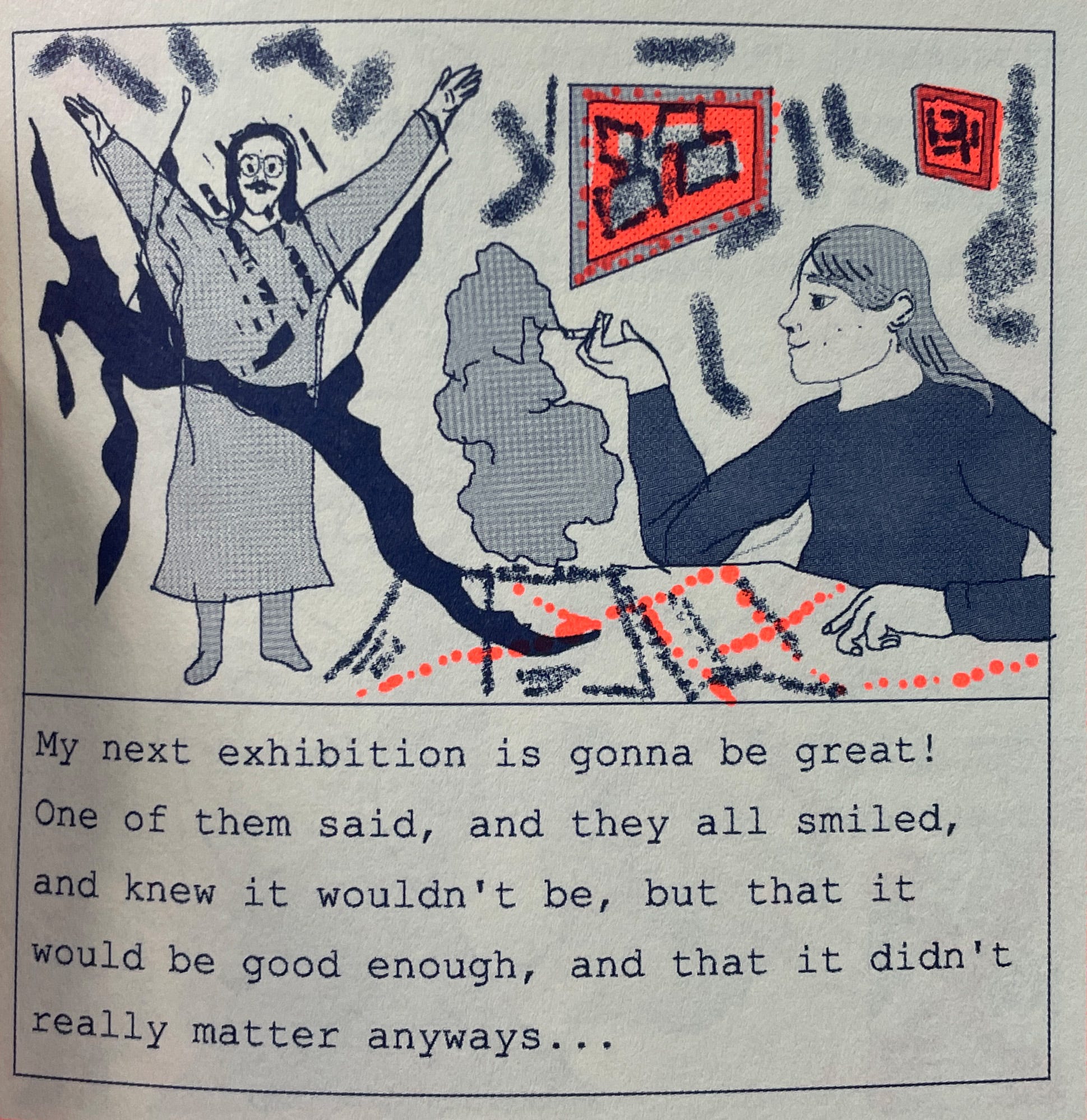
Inspired by the artworks of Jaakko Pallasvuo, below, from his project Avocado Ibuprofen.

this was incredible - keep writing. 🫶🏽
I’m hooked. This is the first piece of your writing I’ve been exposed to, and I’m in 🙋♀️